How to Weatherstrip Doors and Windows
Matching the seal to the gap.
We may earn a commission when you buy through links on this page, at no extra cost to you. This does not change which products we cover. How we make money.
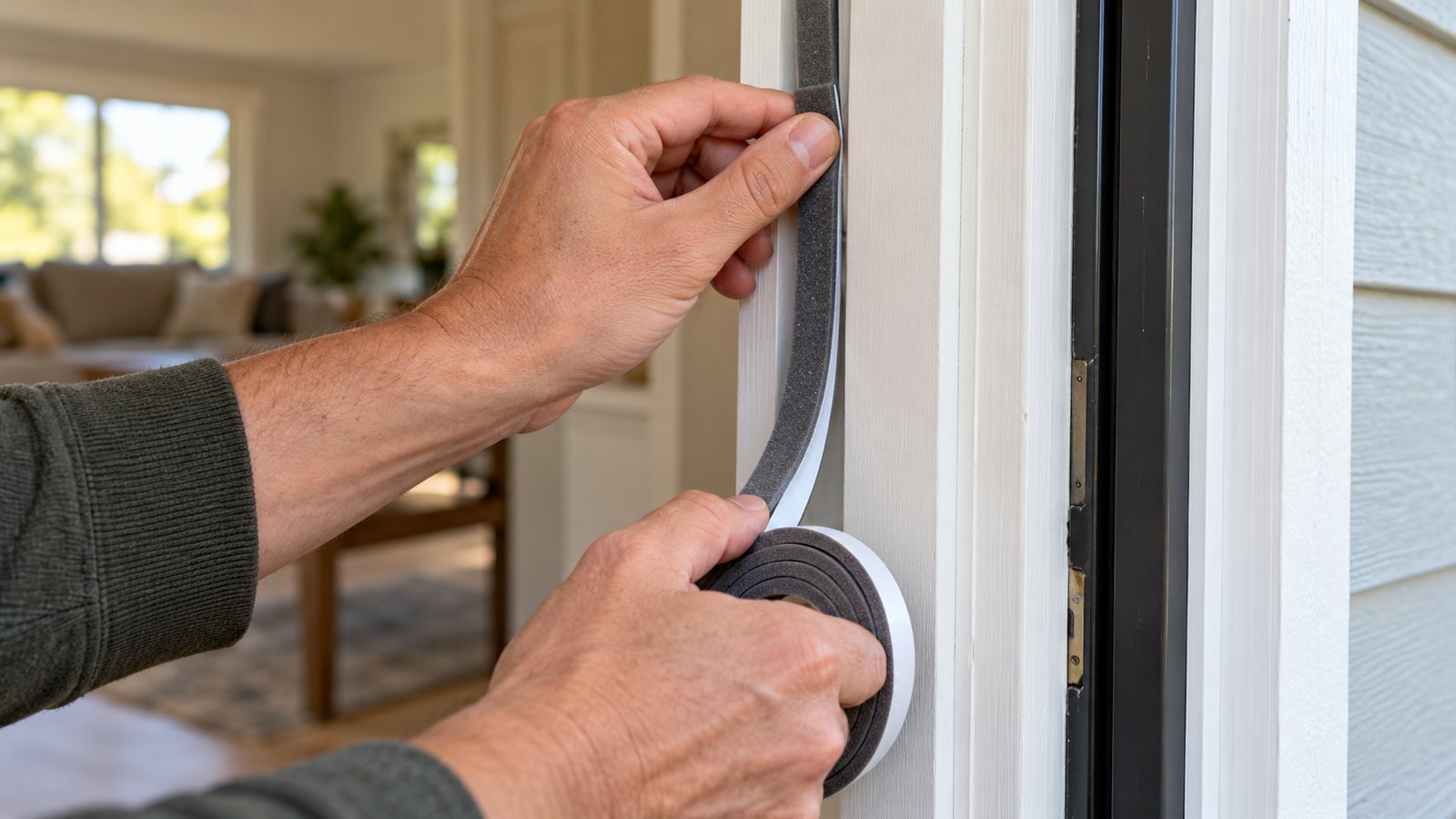
Pick the right seal
| Spot | Common choice |
|---|---|
| Door jambs | Foam or rubber tape, reinforced foam, tubular gasket |
| Door bottom | Door sweep or door shoe |
| Window sash top and bottom | Adhesive foam tape |
| Double-hung or sliding tracks | V-shaped tension seal |
| Fixed cracks | Caulk |
Steps
- Find drafts on a windy day by feel.
- Clean and dry the surface.
- Measure twice and cut to length.
- Make sure the door or window still closes and opens easily.
For windows that still feel cold, add shrink film: see 3M vs Frost King window kits.
Why it is worth an afternoon
The Building America Solution Center (BASC), run for the US Department of Energy, says air leaking through narrow gaps around windows and doors causes drafts. It also lets in dust, pollen, insects and noise, and adds to heating and cooling losses. It rates the project difficulty at 1 and lists the tools as a tape measure, weatherstripping, a utility knife, and optionally caulk and a caulk gun. Weatherstrip windows and doors that open to the outdoors or to unconditioned spaces such as attics and basements. BASC stresses the door between the house and the garage, to keep garage fumes out.
Better ways to find leaks
BASC suggests more than a hand test:
- Tissue test: hold a tissue next to the frame and watch whether it moves.
- Depressurize the house: close all windows and exterior doors, open bathroom and laundry doors and turn on every exhaust fan. That pulls outside air in through leaks, so they are easier to feel.
- Light test: at night, turn on the porch light, turn off the room lights and look for light around the door.
- Dollar-bill test: close the door on a bill. If it pulls out easily, air is probably leaking.
Weatherstrip types compared
Adapted from the BASC table, which draws on DOE guidance:
| Type | Best uses | Pros | Cons |
|---|---|---|---|
| Tension seal (V-strip, vinyl or bronze) | Double-hung and sliding window tracks; top and sides of doors | Durable, invisible, very effective | Needs flat, smooth surfaces; snug corners; can add drag |
| Felt | Around a door or window, in the jamb | Easy, inexpensive | Least effective, low durability, avoid moisture |
| Foam tape (closed-cell, open-cell or EPDM) | Sash top and bottom, door frames, attic hatches | Very easy; works well compressed | Durability varies; for low-wear spots |
| Reinforced foam | Door and window stops, sash, door bottom | Seals well, rigid | Must be sawed, nailed and painted |
| Tubular rubber or vinyl | Around a door | Effective air barrier | Self-stick versions are hard to install |
| Magnetic | Tops and sides of doors, window channels | Very effective | Higher cost |
| Door sweep | Bottom of a door | Relatively easy; many adjust for uneven thresholds | Can drag on carpet |
| Door shoe | Under the door | Sheds rain, durable | Can be hard to install; may need door planing |
Installation details
BASC says to remove old weatherstrip first, then clean the surface with dish soap and water and let it dry completely. Newer doors often have a kerf, a groove in the frame that takes a formed vinyl gasket. Older doors without a groove can take self-adhesive foam tape, or metal and vinyl strips screwed in place. Press the strip firmly into the jamb. Then open and close the door or window to check that it seals without stopping it from closing fully. Caulk the seams in and around the trim. South Carolina Energy Saver adds that weatherstrip is for parts that move, while caulk is for stationary cracks and gaps.
Double-hung meeting rails
If air leaks where the two sashes meet, BASC lists a temporary fix: putty air-sealing cord, pressed in each fall and removed in spring. Permanent fixes include interlocking metal strips or silicone gaskets. Check that the lock still works, since a lock pulls the sashes together. For single-pane windows, BASC also points to interior or exterior storm windows.
If it still feels cold
A strong chill around the frame may mean the rough opening was never insulated or air-sealed. BASC suggests removing the trim to check.
Frequently asked questions
Weatherstrip or caulk?
Weatherstrip moving parts like doors and sashes. Caulk fixed cracks.
What goes on the bottom of a door?
A door sweep or door shoe.