Space Heater Safety: 7 Rules from Fire Safety Experts
The fire-safety basics for portable heaters.
We may earn a commission when you buy through links on this page, at no extra cost to you. This does not change which products we cover. How we make money.
Seven rules
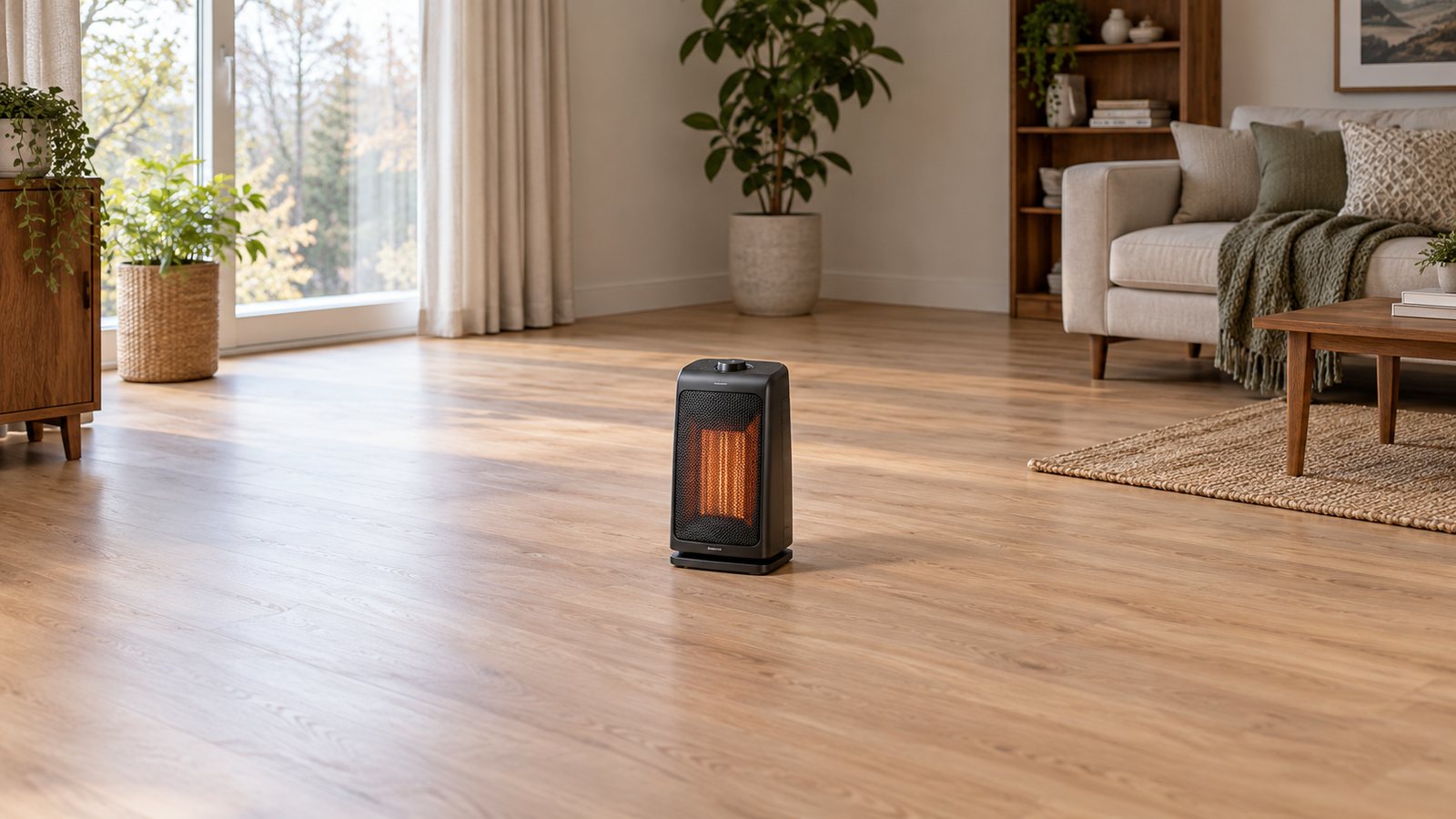
- Keep the heater at least 3 feet from anything that can burn, including people.
- Plug it directly into a wall outlet. No extension cords or power strips.
- Buy a heater listed by a testing lab, with thermostat or overheat control and automatic tip-over shut-off. Compare in best space heaters.
- Set it on a solid, level floor out of walkways.
- Keep children and pets away.
- Turn it off and unplug it when you leave the room or go to bed.
- Test smoke alarms. See carbon monoxide safety for fuel-burning heat.
Why these rules exist
NFPA’s tip sheet notes that portable space heaters have become a popular way to supplement central heating or heat one room. It also gives a stark figure: two in five deaths in space heater fires involve portable electric space heaters. Each rule above targets one of the ways a heater starts a fire. Distance keeps fabric, furniture and people out of the heat. A direct wall connection avoids overloading a cord. Safety features shut the unit off when something goes wrong.
The NFPA checklist, explained
| NFPA rule | What it means in practice |
|---|---|
| Seal of a qualified testing laboratory | Look for the certification mark on the heater or its box |
| At least 3 feet (1 metre) from anything that can burn | Curtains, bedding, furniture and people all count |
| Thermostat and overheat protection | The heater regulates itself and shuts off if it overheats |
| Solid, flat surface | A stable, level base so it cannot tip easily |
| Automatic tip-over shut-off | It turns off if knocked over |
| Out of foot traffic; never block an exit | Keep it where nobody will trip on it or the cord |
| Keep children away | Supervise, and place the heater where kids cannot reach it |
| Plug directly into the wall; never an extension cord | No power strips either |
| Off and unplugged when you leave or sleep | Do not let it run unattended |
Types of electric heater
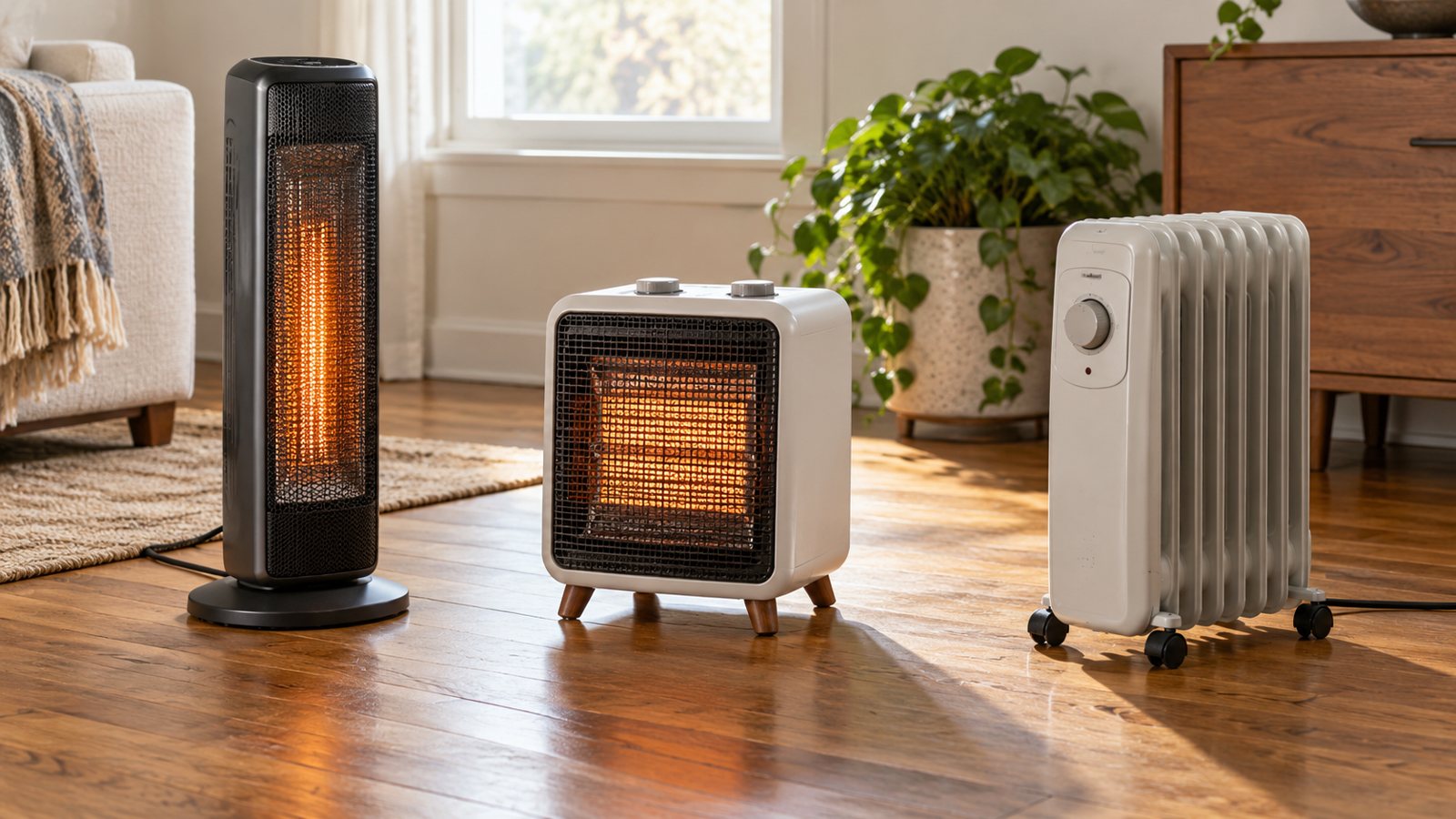
NFPA lists four common designs:
- Oil- or water-filled radiator: heated oil or water travels through the heater.
- Fan-forced: a fan blows air over hot metal coils.
- Ceramic: air is warmed over a ceramic heating element.
- Infrared: heat comes from infrared bulbs.
The same safety rules apply to all four. Our best space heaters roundup notes which models list tip-over and overheat protection.
Fuel-burning heaters
The NFPA sheet covers electric heaters. If you use a fireplace, wood stove or kerosene heater, CDC’s winter guidance adds a smoke alarm and a battery-operated CO alarm near the heated area, plus a dry-chemical extinguisher nearby. See our carbon monoxide safety page.
Frequently asked questions
Can I use an extension cord?
NFPA says no. Plug electric heaters directly into a wall outlet.
How far from furniture?
At least 3 feet from anything that can burn, NFPA says.